
These guidelines sum up what we ask of journalists, photographers, video makers and content creators who want to cover the furry community. They are based on the press rules of the main international conventions and on the experience of people who have been part of the fandom for twenty years.
Five principles for fair coverage
- Start from the data, not from stereotypes. There is more than ten years of academic research on the fandom, and it is worth using. The main figures are on the page The furry fandom in brief.
- Keep things distinct. Furry, therian and otherkin are not synonyms, and the fursuit is not the whole fandom (only a minority own one, according to Furscience).
- Don’t go for sensationalism. Adult content exists, as it does in many adult communities, but it doesn’t represent the fandom. Furscience notes how some media portrayals from the early 2000s damaged the fandom’s reputation for a long time (Furscience 10.5).
- Check “viral news”. Stories such as the one about litter boxes in schools are hoaxes debunked by fact-checkers (see Frequently asked questions and myths).
- Protect people. Many furries have not told their family or workplace about their hobby, and furries are bullied almost twice as often as non-furries (The Conversation). A person’s legal name, on its own, is not news.
Consent: photos, video and interviews
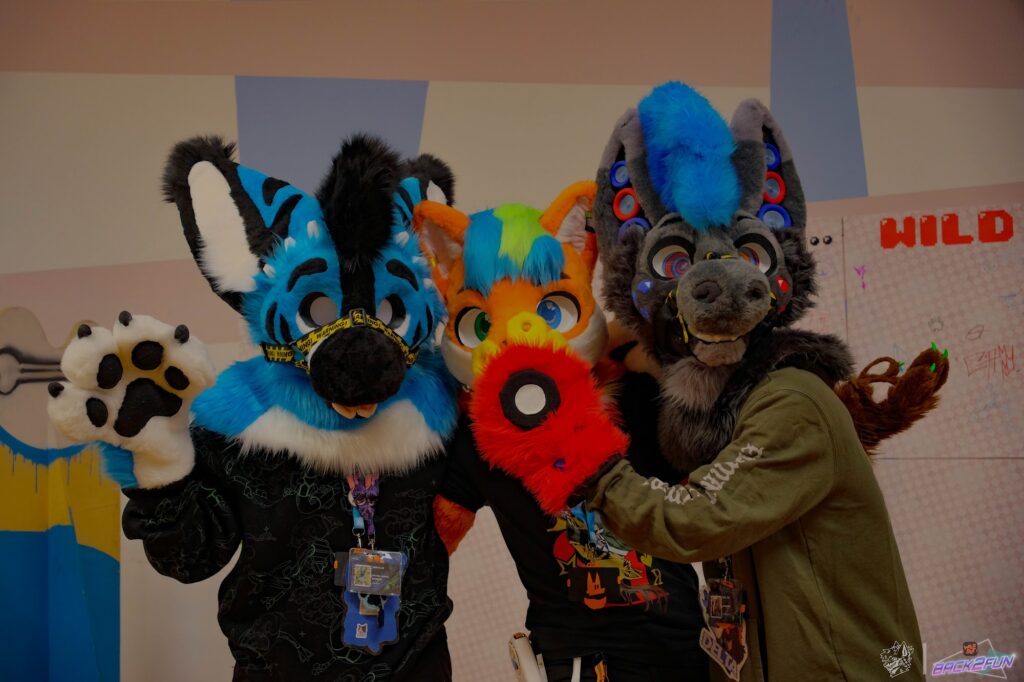
- Always ask permission before photographing, filming or interviewing anyone, in costume or not. Anthrocon’s guide asks people to request permission for photos and hugs, out loud and also with gestures, because some fursuiters can barely hear, and reminds everyone that “cosplay is not consent”: wearing a costume does not mean giving consent (Anthrocon).
- No flash without explicit permission, no unrequested physical contact, and don’t touch or pull at parts of the costume (Anthrocon).
- Consent to a photo is not consent to publication under a full name. Always explain where and how the material will appear.
- For recorded interviews, make clear in advance the publication, format and timing, and whether the person’s voice or face will be recognisable. Offer them the option of being quoted only under their character’s name.
- Faces of people not taking part. At public parades, spectators and companions out of costume may not want to appear: if they are recognisable, ask or blur them.
The identity of the person in the costume
- Never ask a fursuiter to take off the costume head, whether for a photo or for a “face uncovered” interview. If someone chooses to be filmed out of costume, it must be their own idea.
- Don’t photograph “headless” areas. Conventions provide rest rooms (fursuit lounges) where people can take off the costume head; Eurofurence explicitly bans photos, video and audio recording in the Fursuit Lounge and in the other areas for “headless” fursuiters (Eurofurence: Rules of Conduct).
- Don’t reveal anyone’s real-life identity (name, surname, job, city, personal social media profiles) without explicit, informed consent. Don’t try to piece it together by cross-referencing photos, badges or number plates.
- Use the character’s name (fursona) if the person asks you to. This is common practice: in the fandom people often know each other only by their character’s name, sometimes for years. In your text you could write, for example, “Grey Wolf (the name of their character)”. If the person gives different pronouns for themselves or for their character, respect them.
Convention rules for the press
Every convention has its own rules, which you should read before you go. Those of the big international conventions have a lot in common, though.
| Convention | Accreditation | Main rules | Contact |
|---|---|---|---|
| Anthrocon (Pittsburgh, USA) | Official Press Badge | Journalists and photographers must display the Press Badge or be accompanied at all times by a senior staff member; without a badge, no interviews, photos, audio or video are allowed except under escort. Bloggers and podcasters do not need accreditation only if they make no recorded interviews or documentary footage; the press pass can be revoked at any time. | Standards of Conduct · press@anthrocon.org |
| Midwest FurFest (Rosemont, USA) | Press pass on request | To apply you need at least 2 years of editorial activity, a publication in the last 90 days, a cover letter, a letter of intent and, for professional outlets, a letter of assignment. Press must display the badge and be accompanied by a staff member at all times; photos and video intended for publication or broadcast are not allowed without written authorisation. Applying does not guarantee accreditation. | Press & Media · press@furfest.org |
| Eurofurence (Hamburg, Germany) | Registration and accreditation as a press representative | Any use in commercial productions (newspapers, TV, documentaries, stock photos, advertising) requires accreditation, before the event or on site, through the Press & Media Relations Department. Private recordings are allowed but must not be published without the consent of the people shown. No filming in the Fursuit Lounge. Adults only. | Photo and media FAQ · help.eurofurence.org |
For events in Italy, contact the organisers well in advance: their details are on the page Sources, studies and useful contacts. If you need help getting in touch with them, write to us on the channels listed on the Contacts page.
Rules you will find almost everywhere
- A visible press pass and, often, a staff escort.
- No-photo areas: fursuit lounges, rest areas, and sometimes specific panels or events. Ask the staff which ones.
- Minors: some conventions are adults only (Eurofurence requires attendees to be 18: Rules of Conduct); others admit minors only if accompanied or with parental permission, and keep them out of adult areas (Anthrocon). Don’t photograph or interview minors without a parent’s consent, and don’t make them recognisable.
- Adult areas: where they exist, they are kept separate from the rest. They don’t represent the event and shouldn’t be used as its defining image.
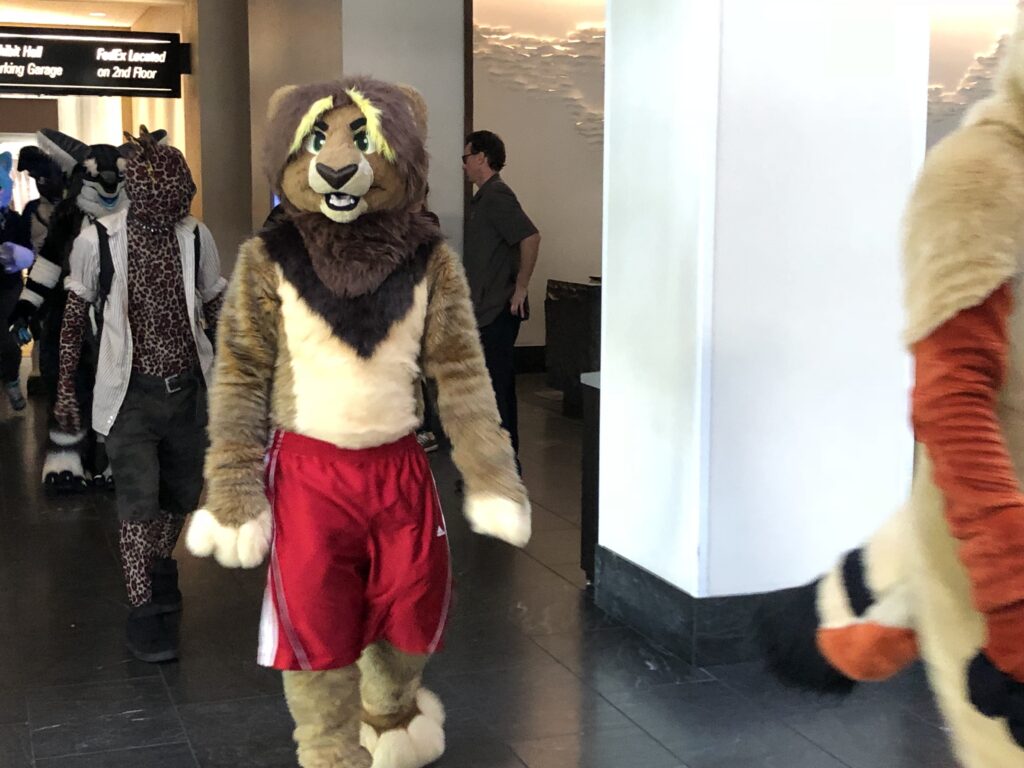
- Fursuiters’ safety: they have limited vision and suffer in the heat. Don’t block their way, don’t come up on them from behind, and give them space (Anthrocon).
Terms to use and to avoid
| Instead of… | Prefer… | Why |
|---|---|---|
| “people who think they are animals” | “fans of anthropomorphic animal characters” | Furries identify with animals, not as animals (Roberts). |
| “dressed up as animals”, “plushie people” | “fursuiters”, “people in fursuits”, “in costume” | A fursuit is a handmade costume representing a specific character. |
| “cult”, “weird craze”, “perversion” | “fandom”, “community”, “subculture” | It is a fandom like those around science fiction, anime or games. |
| “furry” used as a synonym for therian | “furry” and, only where relevant, “therian” explained separately | They are separate phenomena (Furscience 7.1). |
| “the real name of…” as a revelation | the character’s name, if requested | Revealing someone’s real-life identity can expose them to discrimination. |
| “furries are all…” | “according to study X, Y% of participants…” | The fandom is very varied; always cite the source and the sample. |
Short glossary
- Furry: a fan of anthropomorphic animals; by extension, the character itself.
- Fandom: the community of fans.
- Fursona: the anthropomorphic animal character that represents a person in the fandom.
- Fursuit: a mascot-like costume of a character. A fullsuit if complete, a partial if not (head, paws, tail).
- Fursuiter: someone who wears a fursuit.
- Maker: a craftsperson who builds fursuits.
- Handler (or spotter): a companion who helps a fursuiter move around safely.
- Fursuit lounge / headless lounge: a private room where fursuiters can take off the costume head and rest; no photography.
- Fursuit parade: a costume parade, often the most public moment of a convention.
- Furcon: a furry convention, usually lasting several days.
- Furmeet: an informal meet-up (park, restaurant, fair).
- Dealers’ den: the convention’s market for artists and craftspeople.
- Badge: the convention pass, often illustrated with the attendee’s character.
- Toony / kemono: art styles, cartoon-like and inspired by Japanese animation respectively.
- Greymuzzle: an older or long-standing furry (about 9% of participants in Furscience studies).
- Therian: a person who identifies as a non-human animal; a separate phenomenon from being a furry.
- SFW / NSFW: “safe for work” / “not safe for work”, content suitable or not suitable for everyone.
Back to the press kit index, or read the frequently asked questions.
Sources
- Anthrocon: Standards of Conduct (press and minors sections)
- Anthrocon: Dos and Don’ts of Interacting with Fursuiters
- Midwest FurFest: Press & Media
- Eurofurence Help Center: photo and media FAQ
- Eurofurence Help Center: Rules of Conduct
- Furscience: 2.8 Fursuits
- Furscience: 1.1 Age and Ageism
- Furscience: 7.1 Therians: Prevalence
- Furscience: 10.5 Furries’ Assessment of Public Perception/Media Coverage
- Sharon E. Roberts, “What are ‘furries?'”, The Conversation, 7 November 2022
- Wikimedia Commons: Midwest FurFest 2024 133
- Wikimedia Commons: Furry Migration Fursuit Parade 02

