
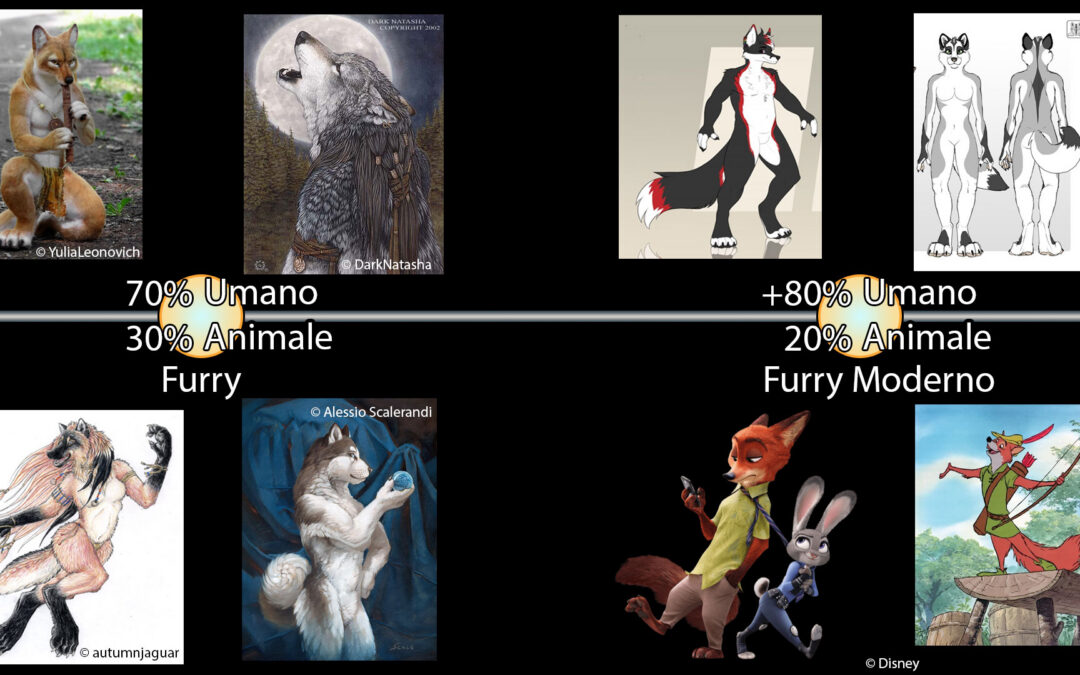
Top photo: the anthropomorphism scale, from animal to modern furry, in a slide from RedFoxy Darrest’s video “FURSONA: Cos’è, come crearla e perché è così importante nel Furry Fandom”. Images by their respective authors, credited in the slide.
In the furry fandom, almost everything about how a person presents and expresses themselves goes through their fursona. What exactly is it, how is it different from any other fictional character or from cosplay, and why do so many furries care about it so much?
In this article we look at what having a fursona means, how fursonas can be classified by their appearance, and the relationship between a person and their animal alter ego.
The article is based on the video FURSONA: Cos’è, come crearla e perché è così importante nel Furry Fandom (in Italian), published on RedFoxy Darrest‘s YouTube channel:
FURSONA: Cos'è, come crearla e perché è così importante nel Furry Fandom | Furry Italia
What a fursona is: the word and the idea
The word fursona combines fur and persona. It’s the anthropomorphic animal a furry uses to represent themselves in the community, standing in for the person who created it.
It can be almost anything:
- An animal that really exists.
- A hybrid of several species, such as the folf, a cross between a fox and a wolf.
- An invented or mythological creature, all the way to cybernetic species like protogens or anthropomorphic vehicles.
- A character taken from an existing franchise, such as Pokémon or Digimon, and customised.
How a fursona differs from cosplay
A cosplayer plays someone else’s character for a while, for fun or out of passion. A fursona belongs to the person who creates it: they identify with it, and to some extent it represents them.
Three ways of relating to furry and to a fursona
Everyone experiences their fursona in their own way, and the same furry may change approach over the years. You can tell three groups apart, though the borders are blurred and people often move from one to another:
- The first approach (the character). This is the stage of people who have just arrived, out of curiosity or through friends. The character is a bit like a video game avatar or a role-playing token: the attachment is still weak, and its species, colours and sex change often. Some people stay at this stage and keep orbiting the fandom, because that first approach is enough for them.
- The furry fandom (the structured avatar). Here people create one or more original characters (OCs) with a background, a stable personality and a story. The fursona mirrors its owner, or a part of themselves they would like to explore, for example a more outgoing or confident side they are afraid to show in everyday life.
- Deep identification (lifestylers, therians and otherkin). In this group the fursona is the person, 100%, and is no longer a character to play: it becomes a spirit animal, a totem or the shape of one’s soul. And since the person grows in real life, the fursona changes over the years too, in looks and personality.
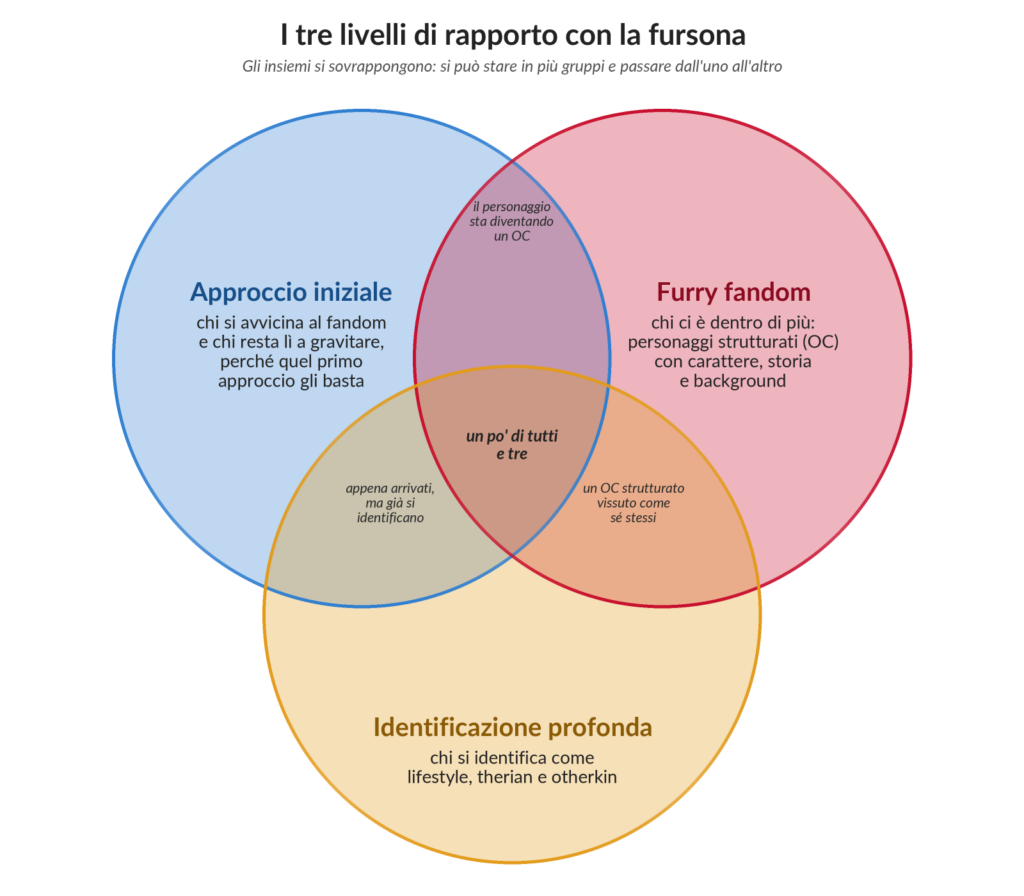
The three levels overlap and mix: you can sit halfway between two groups, or in all three. Diagram: Furry Italia.
The anthropomorphism scale: from animal to human
What makes an animal “anthropomorphic”? Walking on two legs or having hands matters less than self-awareness: the ability to perceive one’s own “I”, to think, speak and make one’s own decisions (“I think, therefore I am”).
Depending on how much of a character is animal and how much is human, you can build a scale that starts from the actual animal and ends with figures that are almost entirely human.
Feral (90% animal, 10% human)
Ferals have an animal’s body and posture, on four legs, but they think, speak and feel complex emotions as humans do. Classic examples are The Lion King, The Fox and the Hound and the protagonist of the video game Okami.
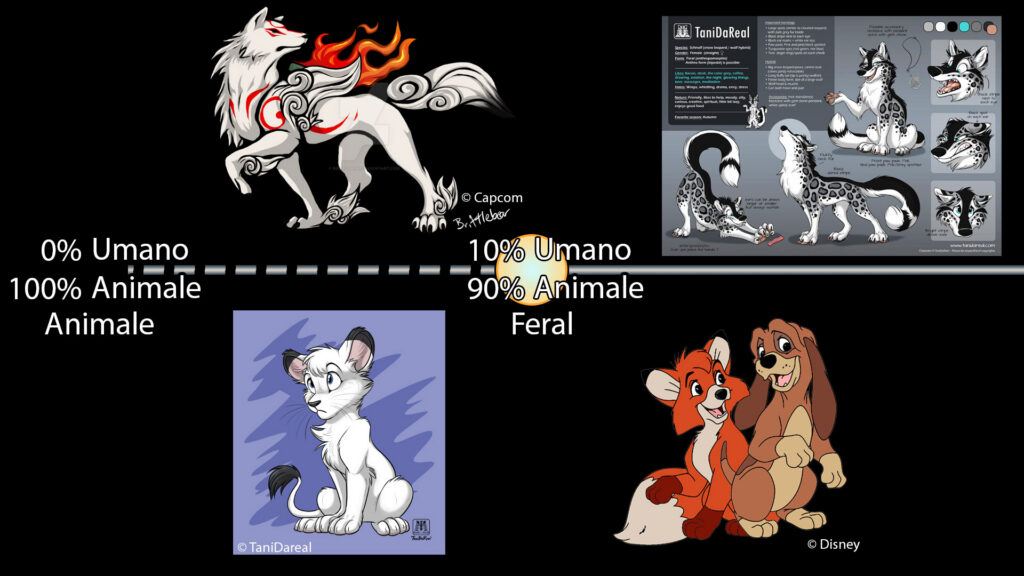
The first stretch of the scale: the animal (0% human) and the feral (10% human). Images: Capcom, Disney, TaniDaReal.
Hispos, lycanthropes and were-creatures (30% to 60% human)
These are big, muscular creatures tied to mythology and to shapeshifting, the ability to change form. They still look like beasts, but they stand on two legs and can hold objects or weapons.
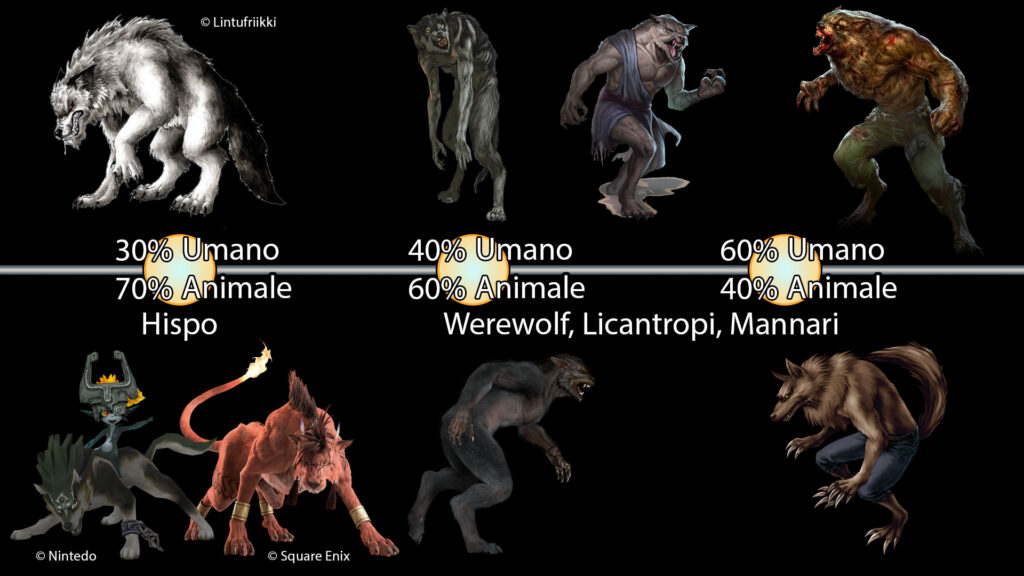
The hispo (30% human, 70% animal) and lycanthropes or were-creatures (40% to 60% human). Images: Lintufriikki, Nintendo, Square Enix.
Classic furry and modern furry (70% human and up)
Until 15-20 years ago furry art aimed mostly at realism, with carefully drawn anatomy and muscles. The modern furry style, following the lead of Zootropolis or Disney’s Robin Hood, prefers sharp, clean lines that look more like a cartoon. That’s partly a practical choice, because characters like these are easier to turn into fursuits, the costumes.
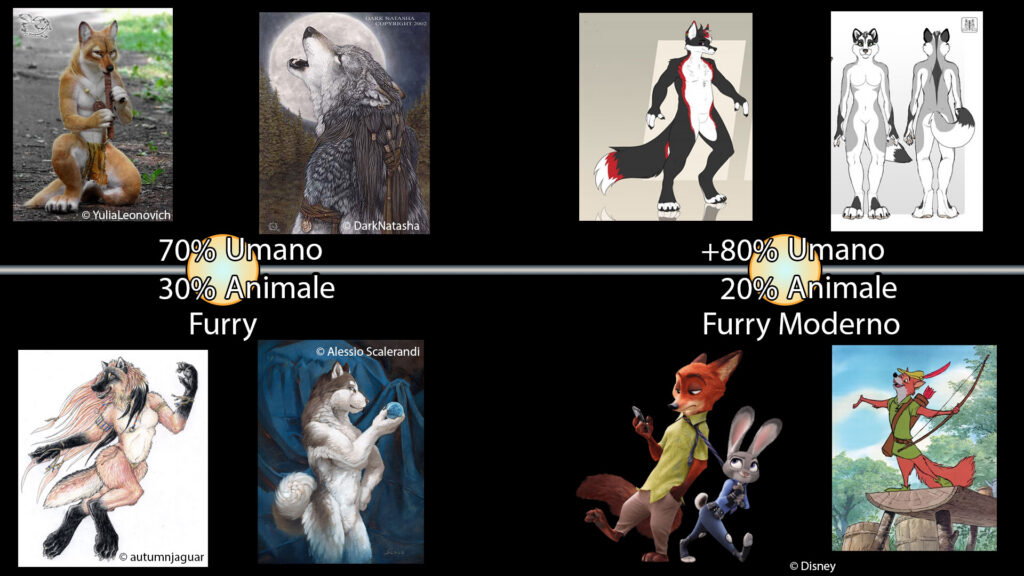
The classic furry (70% human, 30% animal) and the modern furry (over 80% human). Images: YuliaLeonovich, DarkNatasha, autumnjaguar, Alessio Scalerandi, Disney.
In this range you often notice the difference between digitigrade legs, which rest on the toes and keep the shape of an animal’s leg, and plantigrade legs, which rest on the whole sole of the foot like human ones.
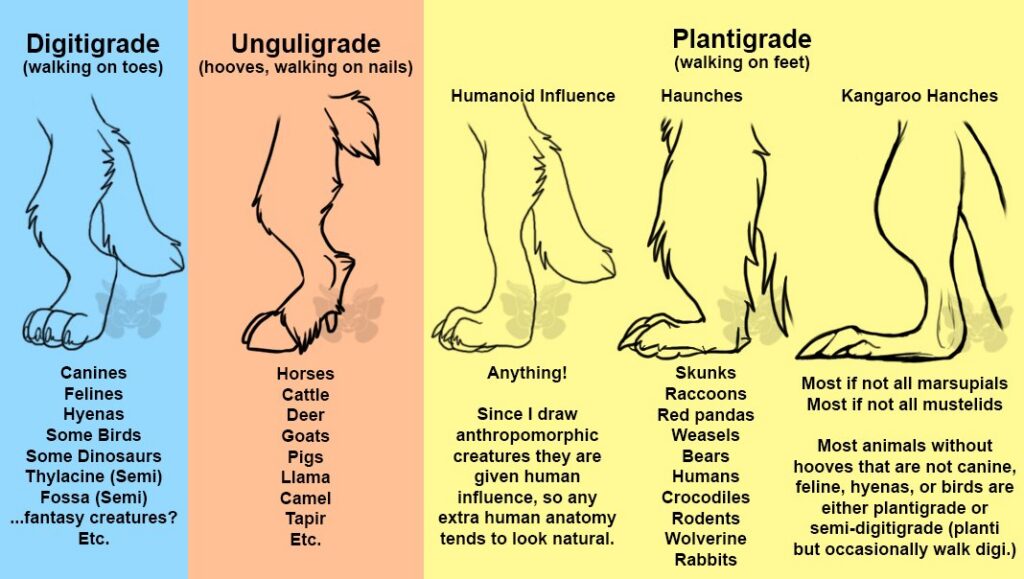
Digitigrade legs (canines, felines, hyenas), unguligrade legs (with hooves: horses, deer, goats) and plantigrade legs (bears, raccoons, rodents, humans). Diagram shown in the video.
Neko and kemonomimi (5% animal, 95% human)
At the other end of the scale are fully human figures with a few animal details: usually ears and a tail, as in Japanese pop culture, or a few shamanic or tribal touches.
Creating your own fursona: some practical advice
You don’t need to be able to draw, but you do need a clear idea of who you are, so you can explain to an artist what you have in mind. A few tips to get started:
- Start from yourself, and take your time. The first question is “who am I?”. There’s no need to pick a species straight away: think about your personality (are you outgoing and affectionate like a dog, or reserved and independent like a cat?) and look for the animal, or mix of animals, that feels like home.
- Don’t overcomplicate the character to get noticed. People who add neon colours, elaborate tattoos or huge horns just to attract attention often get the opposite result: artists struggle to draw the character, and it risks feeling empty. People remember a fursona for the personality of whoever wears it.
- Give the details a meaning. An accessory, a scar, a colour or a pair of wings should be there for a practical reason, or because they mean something to the character’s creator, while pleasing other people isn’t a good enough reason.
The psychological side: a mask that sets you free
Why does the fursona matter so much to people in the fandom? At school, at work and with family, we all wear a “social mask” to meet other people’s expectations.
A fursona works the other way round: by putting on their character’s mask, many people manage to take off the social one and be themselves. In a community that welcomes them and makes them feel safe, the fursona helps them overcome shyness, difficulty socialising and the fear of being judged, and sometimes it works almost like therapy.
Coming out and self-acceptance
For many people, telling friends and family that they’re a furry is a coming out, with the fear of prejudice or of ending up alone. The journey with your fursona teaches you, though, that you feel free once you accept yourself.
A friend who mocks you or drifts away over a personal taste, or over a harmless way of being happy, isn’t a real friend. A fursona starts as fantasy and, if things go well, brings you back to who you are with a bit more self-awareness and confidence.
The fandom’s other words, from fursuit to ref sheet, are explained in our furry glossary.